Introduction
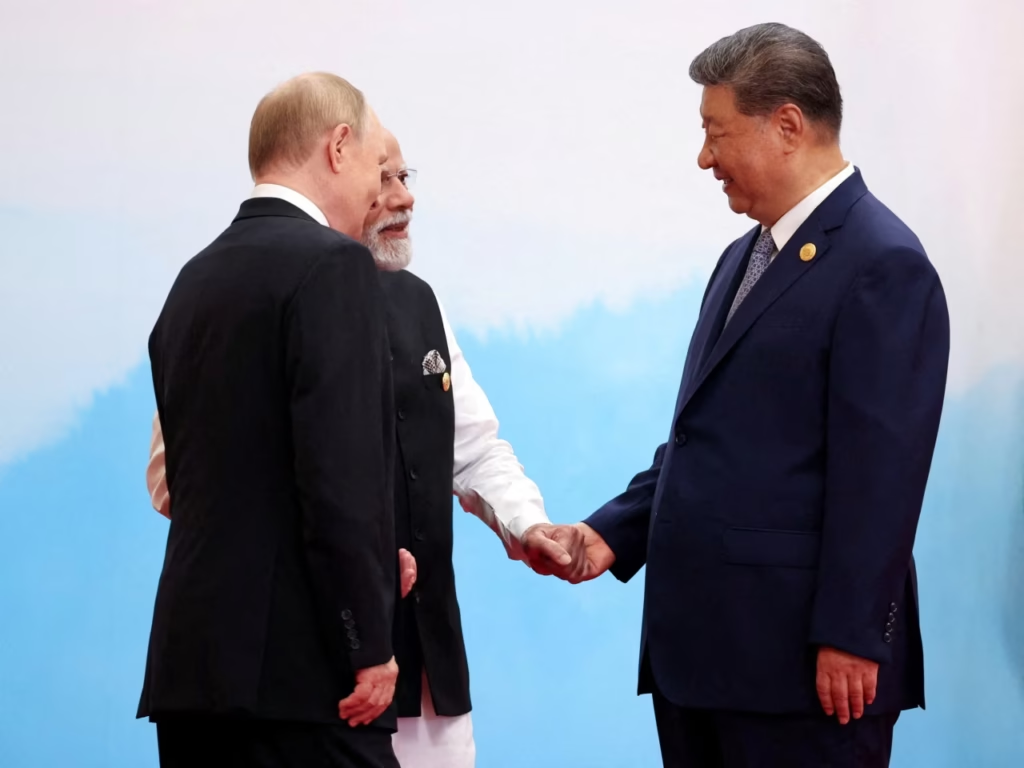
The recent Shanghai Cooperation Organisation (SCO) summit brought global attention as leaders from China, Russia, India, and other member states convened. A central theme emerged: a concerted push for a “new global order.” This phrase, championed prominently by China and Russia, signifies a pivotal shift in international relations. It moves away from a Western-dominated system towards a multipolar world where Eurasian powers have greater influence. Understanding this geopolitical realignment is crucial, as it has far-reaching implications for global trade, security, and diplomacy, affecting everyone from governments to business owners and the general public.
What is the “New Global Order” and Who is Driving It?
The term “new global order” refers to a proposed restructuring of the international system. Historically, global institutions like the United Nations, World Bank, and NATO have been heavily influenced by the United States and its Western allies. The vision put forth by China and Russia, and discussed within forums like the SCO, seeks to dilute this concentration of power.
This isn’t about creating a single new entity but fostering a network of alternative institutions and partnerships. Key drivers include:
- China’s Belt and Road Initiative (BRI): A massive infrastructure project aimed at deepening economic and political ties across Asia, Africa, and Europe, creating new trade routes largely orchestrated by Beijing.
- Russia’s Strategic Partnerships: Leveraging its energy resources and military presence to build alliances, particularly with nations skeptical of Western foreign policy.
- The Shanghai Cooperation Organisation (SCO): This bloc itself is a primary vehicle. Originally focused on border security, it has expanded into a significant platform for economic and political cooperation among its members, which include nuclear powers China, India, and Russia.
The core idea is a world where multiple centers of power coexist, and decisions are made through consensus within groups like the SCO and BRICS, rather than being dictated by a single hegemonic power.
The Importance and Potential Benefits of a Multipolar World
Proponents of this shift, including China and Russia, argue that a more multipolar world offers several benefits, particularly for non-Western nations.
- Balanced Global Governance: A primary benefit is the creation of a more balanced and representative international system. Nations in the Global South often feel their interests are sidelined in Western-led institutions. A multipolar system could give them a louder voice and more agency in global decision-making.
- Economic Diversification: For business owners and developing economies, alternative financial institutions like the Asian Infrastructure Investment Bank (AIIB) and New Development Bank (NDB) provide new sources of funding. This reduces reliance on the World Bank and IMF, potentially offering loans with different conditions and strategic priorities.
- Enhanced Regional Security: The SCO, for example, was founded on combating terrorism, separatism, and extremism. Members benefit from intelligence sharing and joint military exercises, which can stabilize a region. This enhanced security creates a more predictable environment for investment and economic growth.
- Sovereignty and Non-Interference: A key principle championed by China and Russia is “non-interference in internal affairs.” This appeals to many governments that are wary of Western criticism regarding their domestic policies, human rights records, or governance models. It promises a framework for cooperation without political preconditions.
How This Geopolitical Shift Affects Nations and Businesses
For countries, especially those like India which maintain relationships with both East and West, and for businesses operating globally, this shift requires strategic adaptation.
For Governments and Policymakers:
- Pursue Multi-Alignment: Instead of choosing sides, the most effective strategy may be to engage constructively with all blocs. This means participating in SCO initiatives while also maintaining strong ties with Western partners to maximize economic and diplomatic opportunities.
- Focus on National Interest: The key is to evaluate every partnership and agreement based solely on national interest. Does a new trade route from the BRI benefit the economy? Does intelligence sharing through the SCO improve security? Each initiative should be assessed on its own merits.
- Invest in Diplomatic Capacity: Navigating a complex multipolar world requires sophisticated diplomacy. Governments must train diplomats to negotiate effectively with a diverse set of partners with vastly different values and strategic goals.
For Businesses and Investors:
- Diversify Supply Chains: The push for new trade corridors offers alternative routes and sources for materials. Businesses should map their supply chains and identify opportunities within emerging Eurasian networks to build resilience.
- Understand New Regulations: As new economic blocs gain influence, they may establish their own technical standards and regulatory frameworks. Companies must stay informed to ensure compliance and market access.
- Identify New Markets: Infrastructure development under initiatives like the BRI creates new consumer markets and demand for goods and services. Proactive businesses can gain a first-mover advantage in these developing regions.
Common Misconceptions and How to Avoid Them
Navigating this topic requires clearing up common misunderstandings.
- Misconception 1: It’s a Monolithic Anti-Western Bloc. The most common error is viewing the SCO or the China-Russia partnership as a unified, cohesive anti-West alliance. In reality, members have divergent interests. For instance, India has serious border disputes with China and maintains a strong strategic partnership with the U.S. and its allies. The group is often a platform for managing competition as much as it is for cooperation.
- How to Avoid: Analyze each country’s actions bilaterally instead of assuming group consensus. Pay attention to how members interact with each other and with Western nations outside the forum.
- Misconception 2: The New Order Will Completely Replace the Old. This transformation is not about flipping a switch. The existing Western-led system is deeply entrenched. The “new order” is about creating parallel structures that gradually gain influence and provide alternatives, not an immediate overthrow.
- How to Avoid: View this as a long-term, incremental process. Watch for the growing use of local currencies in trade instead of the U.S. dollar and the increasing membership of groups like BRICS+ as indicators of gradual change.
- Misconception 3: It’s Solely About Ideology. While Russia and China speak of opposing Western hegemony, the driving force for many smaller nations is pragmatic economics and security, not ideology. They are motivated by access to development funds and stability, not by a desire to endorse any particular political model.
- How to Avoid: Look at the economic and security agreements signed, not just the political rhetoric. The tangible benefits of loans and infrastructure deals are often the real attraction.
Conclusion
The pledge for a new global order by China and Russia at the SCO summit is a significant declaration of intent. It signals a durable move towards a world with multiple power centers, where the influence of traditional Western institutions is challenged by alternative frameworks. For everyone from policymakers to business leaders, the imperative is to understand this complex transition not in simplistic terms of good vs. evil or East vs. West, but as a new geopolitical reality requiring nuanced engagement. By focusing on pragmatic national interests, diversifying partnerships, and avoiding common misconceptions, stakeholders can navigate this evolving landscape successfully. Staying informed on these developments is no longer optional but essential for strategic planning in the 21st century.